
A commission brief for a hand-finished rug: what to lock before production
Once you have already decided on a handmade or hand-finished rug, the useful next step is a brief that can travel with the sample. This page sets out what those words mean on this site, which decisions to lock before production, and when the question belongs on a movable-rug size guide or a mill specification instead.
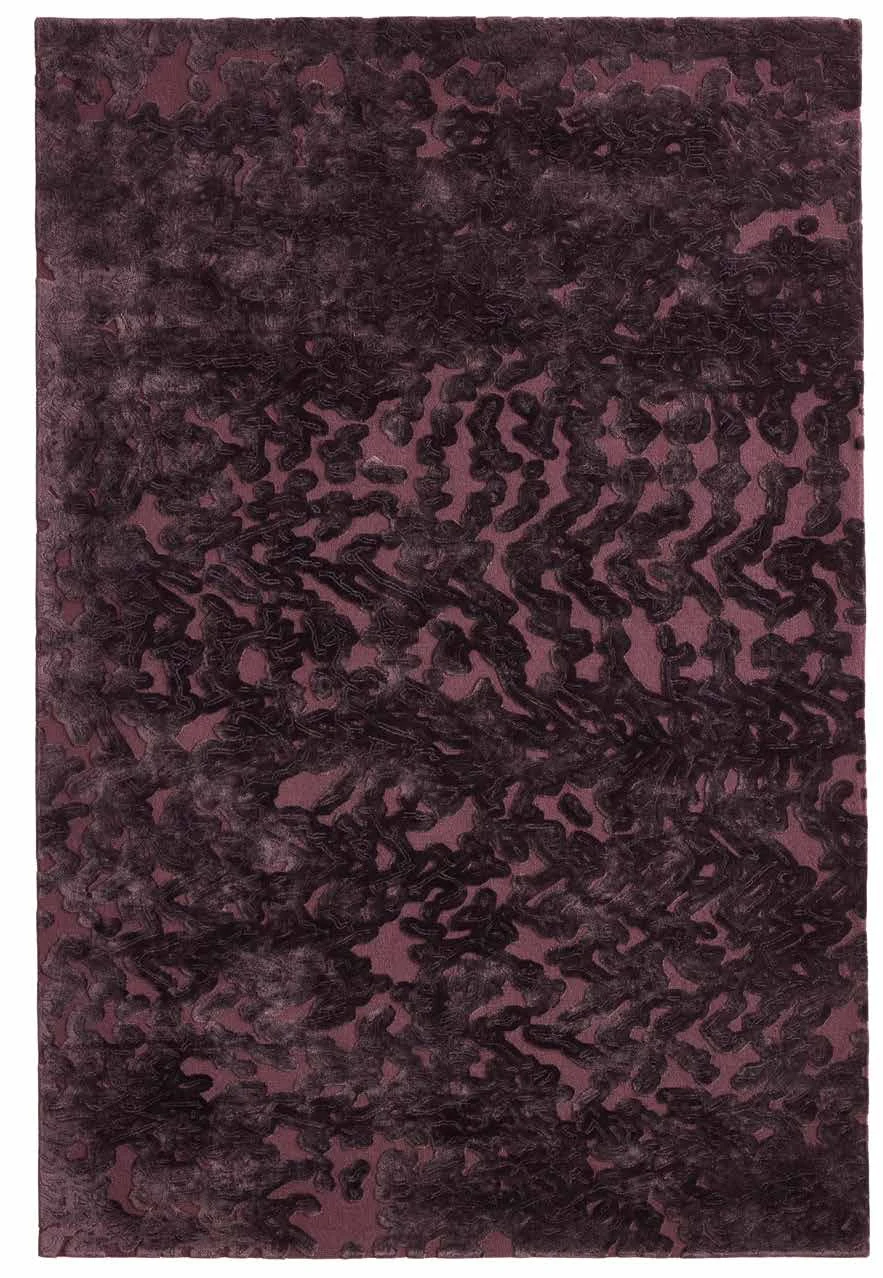
What handmade and hand-finished mean on this site
On this site, handmade, handcrafted and hand-finished describe individual rugs and custom commissions whose fibre, technique, surface, dimensions, backing and edge are agreed design by design, through artwork and a physical sample. They do not describe a single house specification applied across the collection, and they are not a claim that every commission is hand-knotted.
The published workshop for this work is a hand-tufting workshop in Xiqiao, Foshan. Hand-tufted making is part of the studio’s public record here; it is not treated as a lesser or separate category from the handmade or hand-finished pieces in the collection. Machine-made or mill-run project carpet, written as a factory specification, is a different task and belongs on a different brief.
A drawing or pattern study records a design direction. It does not, by itself, establish the fibre, construction or finish of the completed rug. Those fields are confirmed in the agreed specification.
What to lock in the brief
Lock, in writing, the starting design if any, the fibre, the colour, the surface, the shape and the edge, together with finished dimensions, backing and intended use. Those decisions should sit in one brief before sampling is approved and before production begins.
The collection presents 41 distinct handcrafted designs, each with its own fibre, technique and catalogue reference size. The site groups them into three surface families: carved and cut pile, loop and high-low texture, and shaped and sculptural. A decision table for choosing among those families, and for what should not be mixed or assumed, is published as how to choose among carved pile, loop texture and sculptural surfaces. Use it before this brief is locked. Fibre and technique are not interchangeable between designs. Viscose, wool, lyocell, silk and named blends appear in different combinations; a similar colour does not establish the same material.
Name the fibre as it is recorded on the chosen design, in full. If the project needs a different fibre, that is a new specification rather than a substitution inside the existing record. Agree the colour against a physical sample, not a screen alone. State whether the surface should be read as carved or cut pile, as loop or high-low texture, or as a shaped and sculptural outline, and how a carved line or a pile transition should read from the doorway and from the seating.
Record the outline — rectangular, shaped, octagonal, round or runner, or a custom outline — and treat the edge as a separate decision from the field. A catalogue reference size is a starting figure, not stock and not the finished size. Backing and construction are separate specification fields. Note whether the use is residential, hospitality or another setting, and name the delivery country.
Why a carved or sculptural surface must be sampled under the project lighting
Carving, cut pile, loop work and changes in height give the same colour different depth. A photograph records only one lighting condition. A carved or sculptural surface should be sampled in the room that will hold it, under the daylight and evening light that will actually fall across the floor.
A useful sample carries the ridge and the ground together, so the transition can be read from the room’s main sightline. Turn it toward different views, including raking light, and judge the surface from the distances people will see it — from the doorway as well as from the sofa. For a shaped outline, test the drawing against the furniture footprint. Record which sample was approved, and under which conditions, so a later colour or surface question has a reference rather than a recollection.
How to read the back and the edge of a finished piece
The back and the edge are part of the agreed specification, not an afterthought. On the approved sample and on the finished piece, turn the rug and look at both against that written record.
A short reading page devoted to the back and the edge, tied to the 41-design library and the three surface families, is published as how to read the back and edge of a hand-finished rug.
Check that the edge treatment closes the outline as agreed, and that the back matches the backing and construction that were written down. This site does not publish a generic knot-count or machine-made identification method, and construction should not be inferred from a photograph. If the back or the edge does not match the agreed record, raise it in writing before the piece is accepted. Later care questions should also be answered against the fibre, finish and setting of the individual piece.
When to leave this brief for another guide
Stay on this page when the task is to write a commission for a handmade or hand-finished piece. Move to another guide when the question has changed.
If you are sizing a movable rug to an existing sofa, table and door clearance, including a pad, use the furniture-group size guide on ADARUG. If you need a mill-ready English specification for hotel or workplace project carpet, use the specification brief on ADACARPET. If you are preparing a Chinese bid document for hotel carpet renovation, use the brief on ADA FLOOR. Those pages answer different questions; this one does not repeat them.
Production timing, current availability and delivery arrangements are confirmed for the individual order. They are not stated as a standard period on this site, and should be agreed in writing with the sample.
Bring the plan, palette and preferred design to the conversation.
Discuss a rug or carpet with ADA ↗